
Cloud AI for Secured Digital Enterprises: How Smart Businesses Turn Data into Intelligent Action
In 2026, every serious business is a digital business. Sales conversations happen online, operations are managed through software, marketing runs on data, and customers expect instant, accurate responses. This has made data the most valuable raw material inside organizations. Yet, for many companies, data remains something that is collected and reported, not something that actively guides decisions. This is where Cloud AI is quietly transforming how modern enterprises operate.
As explained in our pillar blog The Future-Ready B2B Company, the next generation of successful organizations is being built on a powerful foundation where cloud provides scale, AI provides intelligence, and digital systems provide execution. Cloud AI sits at the center of this model. It is not a technology trend. It is a new way of running a business that is faster, safer, and more intelligent.
For non-technical decision-makers, Cloud AI can be understood in simple business terms. Think of cloud as your company’s always-available digital workspace where all systems and data live. Think of AI as a tireless business analyst who watches everything that happens inside the company, finds patterns, warns you early about risks, and highlights opportunities before they become obvious.
Most businesses today are rich in data but poor in insight. They have CRM data, finance data, operations data, marketing data, and customer service data, but these systems often do not talk to each other. The result is delayed reporting and slow decision-making. Leadership meetings are spent discussing what happened last month instead of what should be done this week. Cloud AI changes this by connecting data in real time and continuously analyzing it in the background.
Consider a growing manufacturing or distribution company operating across multiple regions. Every day it handles enquiries, orders, inventory, deliveries, and service issues. In a traditional setup, these activities are tracked in different systems and reviewed later in reports. In a Cloud AI-driven setup, the business starts seeing patterns as they happen. If one region is generating more leads but lower profits, or if a product is causing repeated service issues, the system surfaces this early. Management can act before small issues turn into expensive problems. This is the shift from managing a business by reports to managing it by intelligence.
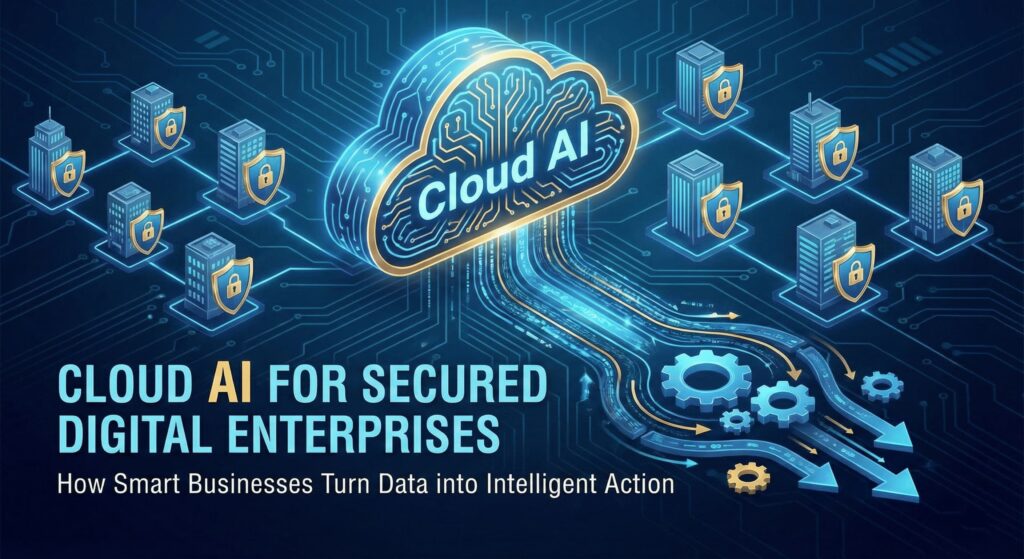
Cloud AI creates value in three very practical ways for most enterprises:
- It turns scattered business data into real-time, decision-ready intelligence
- It reduces manual work by automating prioritization, follow-ups, and routine actions
- It improves security and risk control by detecting unusual behaviour before damage happens
One of the most powerful impacts of Cloud AI is in analytics. Traditional analytics tells you what has already happened. Cloud AI helps you understand what is likely to happen next. A B2B services company, for example, can use AI to predict which leads are most likely to convert, which clients are at risk of dropping out, and which services generate the highest long-term value. This changes planning from guesswork into foresight and turns experience into a measurable advantage.
Automation is another area where Cloud AI quietly transforms daily operations. In most organizations, a surprising amount of time is spent on coordination, approvals, reminders, and repetitive tasks. Cloud AI does not just follow fixed rules. It learns patterns. It can decide which leads should be contacted first, which customers need attention, and which internal processes are slowing the business down. This does not replace teams. It allows them to focus on decisions, relationships, and growth instead of administration.
Security is also no longer just an IT concern. In cloud-based digital enterprises, AI acts like a silent security manager. Instead of only blocking known threats, it watches behavior. If a user account suddenly behaves differently, or data is accessed in an unusual way, the system can react immediately. This is especially important for industries like finance, healthcare, education, and enterprise services, where data protection and compliance are critical to trust and reputation.
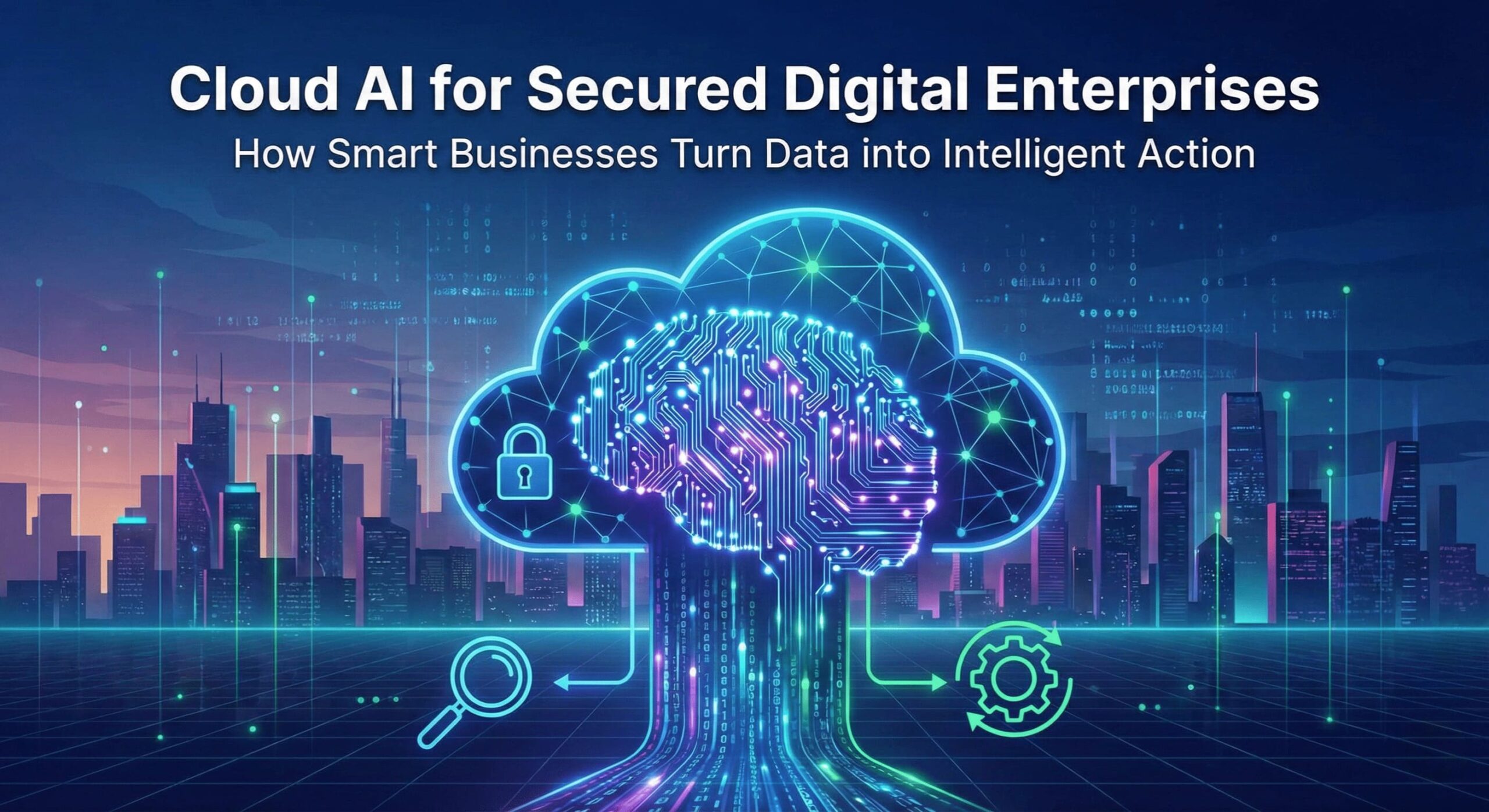
The real strategic value of Cloud AI lies in how it changes decision-making. Running a business without it today is like driving while only looking in the rear-view mirror. You can see where you have been, but not clearly where you are going. Cloud AI gives leaders a forward-looking view. It helps them spot risks earlier, identify opportunities faster, and allocate resources more intelligently. Over time, this creates a compounding advantage that competitors find very difficult to catch up with.
This is why Cloud AI is not just an efficiency tool. It is a competitive advantage. Two companies may operate in the same market with similar products and prices. The one that uses Cloud AI will react faster, understand customers better, and operate with more precision. In markets where speed and experience define success, this difference becomes decisive.
As described in The Future-Ready B2B Company, cloud is the foundation and AI is the intelligence layer of modern growth systems. Without cloud, AI has no clean, connected data to learn from. Without AI, cloud remains just a place to run software. Together, they create what can only be described as a thinking enterprise.
The smartest way to start is not to change everything at once. Most successful companies begin by applying Cloud AI to one core area such as CRM, finance, or operations, prove the business value, and then expand step by step. This makes adoption practical, low-risk, and sustainable.
In the end, Cloud AI is not about becoming a technology company. It is about becoming a decision-driven, intelligent, and future-ready enterprise. In the coming years, the real difference will not be between companies that have data and those that do not. Everyone will have data. The difference will be between companies that turn data into reports and those that turn data into action.
And that difference will define the next generation of market leaders.